
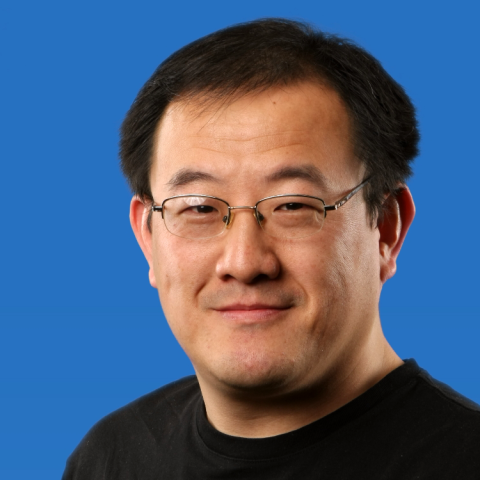
We caught up with Haishi Bai, Principal Architect at Microsoft, whose career has been shaped less by a traditional path in automotive and more by a lifelong commitment to learning and open source innovation. Known for his contributions to Eclipse SDV projects like Eclipse Symphony and, of course, his talks and mentorship at the Eclipse SDV Hackathons, Haishi has spent the past decade immersed in open source communities, driving tools that empower developers worldwide. Influenced by a problem-solving mindset formed during his education in China, and guided by the belief that passion should lead one’s work, he continues to approach every challenge as an opportunity to build something meaningful.
When and how did you start your career in automotive?
I actually never started a formal career in automotive. I still see myself as a student of the industry: learning continuously while contributing through open source initiatives like Eclipse Symphony.
How has open source software influenced or changed your work and career?
Open source has shaped almost everything I do. For the past decade, I’ve worked almost exclusively on open source projects. It’s been an exciting and rewarding journey, helping kick off projects like DAPR, KEDA, Copecetic, Eclipse Symphony, and others. Seeing these tools grow and support developer communities has been one of the most fulfilling parts of my career.
What has been your #1 benefit of joining the Eclipse SDV Working Group?
For me, it’s the learning experience. Through the Working Group, I’ve had the chance to meet OEMs, developers, entrepreneurs, and visionaries from around the world. Every conversation teaches me something new.

What’s your 1-sentence pitch for Eclipse Symphony – why is it worth getting involved in the project?
A platform-agnostic workload orchestrator designed to manage workloads across cloud and highly heterogeneous edge environments.
How would you describe Eclipse SDV in three hashtags?
#OpenInnovation #SoftwareDefinedFuture #GlobalCollaboration
"Open source has shaped almost everything I do."
What first got you interested in technology or software development growing up in China?
In middle school, I was part of the math team, and we were given access to the school computer lab. The moment I saw the blinking green cursor, I was hooked. The idea that you could build an entire universe with just code was almost ethereal to me – and that feeling has stayed with me ever since.
Were there particular experiences in your education in China that influenced your approach to problem-solving?
China’s education system is excellent at developing engineers. I was trained to think objectively, work systematically, and use data-driven decisions to solve complex problems. At the same time, the environment also encourages pushing for excellence while finding creative ways to tackle seemingly impossible goals.
"The idea that you could build an entire universe with just code was almost ethereal to me."
Are there values from your upbringing that guide your work or career decisions today?
One value that has always stayed with me is that you’re truly living only when you pursue what you’re passionate about. Otherwise, you’re just surviving. I feel incredibly fortunate to make a living doing what I love, and that mindset helps turn challenges and difficulties into exciting adventures. It keeps me reaching for harder, more meaningful problems to solve.
Previous SDV committer interviews:
Luca Cominardi (Eclipse Zenoh)
Frank Märkle (Eclipse OpenDUT)
Kerstin Keller (Eclipse eCAL)
Elena Gantner (Eclipse S-CORE)
Michael Engel (Eclipse BlueChi)
Nhan Luong (Eclipse Autowrx)


