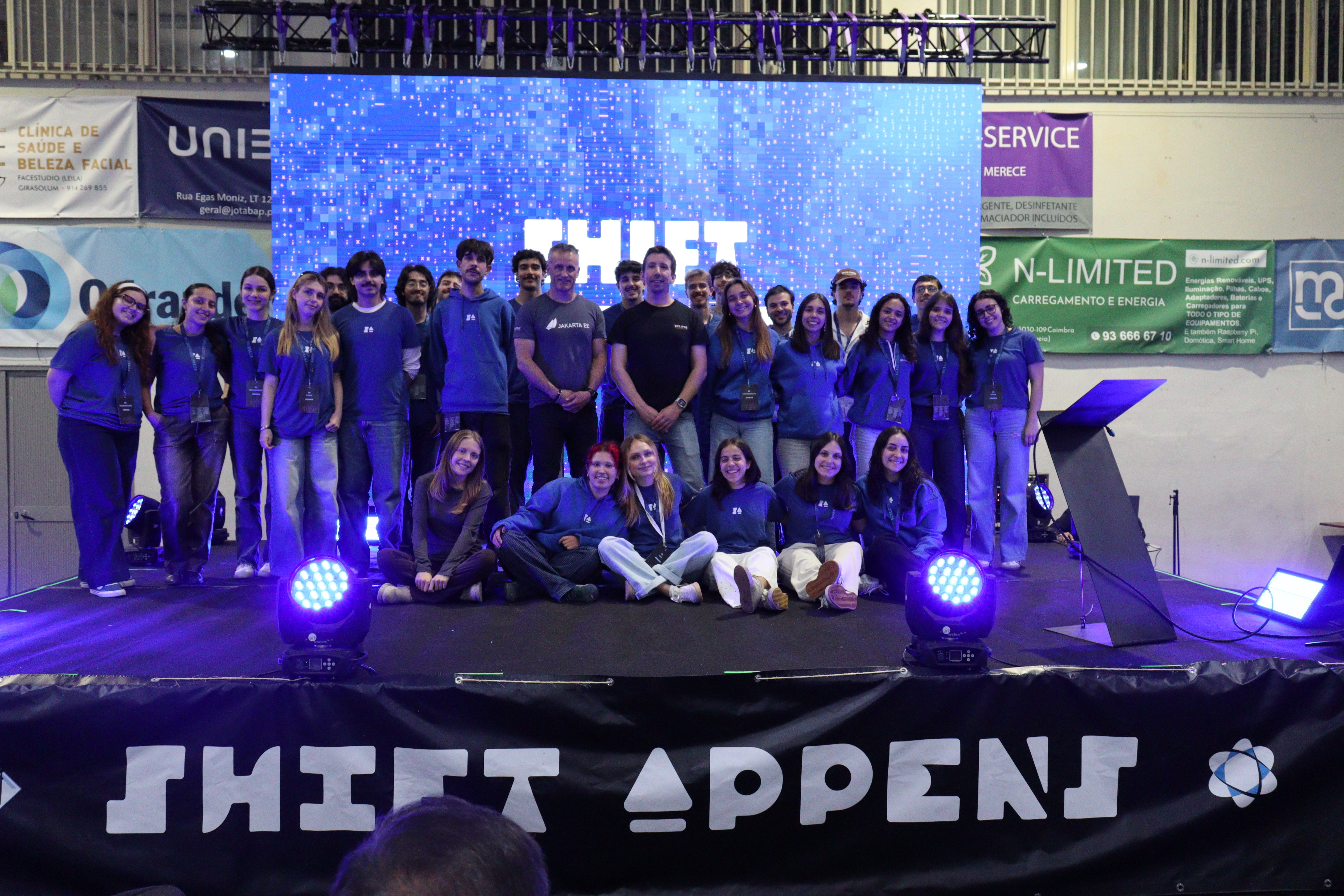
I finally got around to write about ShiftAPPens 2026. The Hackathon was an amazing experience. Around 150 students came together in a sports hall to participate in this hackathon that over the entire weekend from Friday around lunch until Sunday afternoon.
Since Jakarta EE was a gold sponsor of the hackathon, we could have a challenge of your own. The challenge we proposed was to create a “Know-me-Engine” where the teams should build a Jakarta EE application that interacted with an LLM using augmenting techniques to make the application provide better recommendations. We kept the challenge pretty open to encourage creativity. The motivation we pitched for taking our challenge was that even if they learn other languages and technologies at their university, they will most likely be working with Java, Jakarta EE, and related libraries, frameworks and tools when they start their career after graduation. The World runs on Java, and Jakarta EE is a significant part of that.
In total, seven teams chose to take on our challenge.The teams were composed of one up to four persons. We were pretty curious about what the participating teams would be able to create during the weekend. Would the challenge be to hard? Or too easy? It turned out to be pretty well in the middle. The teams required a minimum of guidance and were able to come up with some pretty cool usages of our technology.
The three judges, Otavio Santana, André Gomes, and myself had a difficult task of selecting the winner when the challenge ended on Sunday. We first narrowed it down to three teams that we asked to give us a 10 minute pitch of their solution. After that, we deliberated a little before unanimously selecting the winning team: VelociGrammers consisting of Carlos Ferreira, Dinis Isaev, António Silva, and Diogo Monteiro.

The VelociGrammers created a Movie A(I)ssistant named Chaplin that used data from your profile on TMDB to add context and relevance to the interaction. It could also directly update your movie ratings from the chat dialogue by providing the TMDB API as tools for the assistant. They used Jakarta EE 11 to create a RESTful Web Services API and interacted with the LLM using Langchain4j-CDI. The UI was developed as a simple HTML page using JavaScript to call the REST services. It all was deployed to WildFly.
The students participating in our challenge said that it was a very fun and creative challenge. And that they were surprised over how easy and powerful developing with Jakarta EE was. This show how important it is to reach out to the learning institutions to make sure that they teach this to students so they can get relevant experience for their future careers.