The first half of 2026 has been a period of consistent technical progression and ecosystem alignment for the Eclipse Oniro project. While the first quarter focused primarily on establishing foundational development environments and framework integrations, the second quarter successfully translated that groundwork into native deployment on retail consumer hardware and active community outreach.
By balancing software development with strategic governance, Oniro has maintained a steady operational trajectory. Below is a comprehensive look at the major achievements across both Q1 and Q2.
Engineering Milestones: Tooling, Frameworks, and Retail Hardware Support
Technical efforts throughout the first half of the year focused on lowering entry barriers for application developers and expanding core hardware compatibility. In Q1, the engineering team established solid platform support for popular development frameworks, specifically Ionic’s Capacitor and Tauri. By using AI-assisted engineering workflows, the team demonstrated that the time required to port complex software could be substantially reduced. This period also saw the maturation of developer infrastructure with the release of Oniro IDE v0.3, which introduced a project wizard and Windows compatibility to simplify early-stage development.
Building upon these foundations in Q2, the team upgraded core infrastructure by rebasing both the Raspberry Pi support and the Oniro emulator to kernel version v6.1. The project also optimised its command-line utilities for automated AI coding workflows, forming the baseline for the new Oniro IDE VS Code extension. To support flexible application distribution, a simple open source app store proof-of-concept was launched, with long-term plans to expand it into a full registry model based on the vendor-neutral Open VSX framework architecture. The team also began evaluating the integration of Lynx, a high-performance cross-platform user interface framework, with the goal of bridging it into the Oniro and OpenHarmony environments.
This combined progress in tooling and frameworks directly accelerated the application ecosystem across both quarters:
- VLC Media Player: The team successfully completed the core porting work for the media player using native interfaces.
- Wikipedia: The porting process for a fully functional Wikipedia application was completed in Q2 and has been upstreamed into the main repository.
- Messaging Verticals: Q1 saw the functional port of the Telegram client to the Huawei Watch 5, followed by the public source-code release of the wearable client in Q2. Concurrently, progress was made bridging Signal libraries to the ArkTS user interface, and engineering is now evaluating how to migrate the client port to connect directly with official production servers.
On the hardware layer, these software achievements are now running directly on retail devices. Flashable Oniro system images are fully ready for the Volla X23 smartphone and the Volla Tablet, achieving a native boot right on top of an Android baseline. The team continues to polish the user experience on these devices by tuning system gestures, default wallpapers, and boot animations.
Ecosystem Growth, Governance, and European Outreach
Oniro's community footprint and organisational structures grew steadily throughout the first half of the year. In Q1, the core technical team was strengthened by officially welcoming Chen Song and Paweł Mandes as new committers. Q2 accelerated this growth with the onboarding of YanLink as a new Working Group member. Headquartered in Paris, France, YanLink is a full-stack Industrial IoT solution provider combining open-source operating systems with next-generation connectivity and edge AI, bringing extensive experience in open source OS development and commercialisation. Within Oniro, YanLink’s roadmap includes driving the integration of low-latency NearLink wireless technology, delivering smart edge AI video analytics solutions ("AI Box"), expanding hardware board support, and building Oniro-powered consumer devices like smart feature phones and tablets.
Alongside welcoming YanLink, advanced conversations are underway regarding Linaro's prospective return to the Working Group, and the team is in active discussions with several other member prospects. Additionally, the Working Group concluded its Steering Committee elections for the 2026–2027 term, with Oniro Project Lead Francesco Pham continuing in his role as the Committer Member Representative following an uncontested nomination. Because no nominations were received for the Silver Member Representative position, that seat remains vacant for this cycle.
Public outreach and technical dissemination linked our strategic goals across both quarters through three major event appearances:
- FOSDEM 2026 (Brussels): Q1 kicked off with strong technical engagement, featuring a well-attended session on Oniro’s porting efforts that facilitated direct dialogue with European developers.
- Open Community Experience (OCX 2026, Brussels): The Eclipse Foundation flagship event took place on April 21-23, 2026, and served as a major highlight. The Oniro booth featured live demonstrations across multiple form factors, including dev boards, smartwatches, smartphones, tablets, laptops, and a dog robot. Strategic keynotes included a session by Yutao Liu outlining Oniro and OpenHarmony as a shared foundation for cross-device intelligence, and a session by Jaroslaw Marek addressing digital sovereignty alternatives to the mobile duopoly. Behind the scenes, the Steering Committee met in person on April 23 to refine the H2 roadmap.
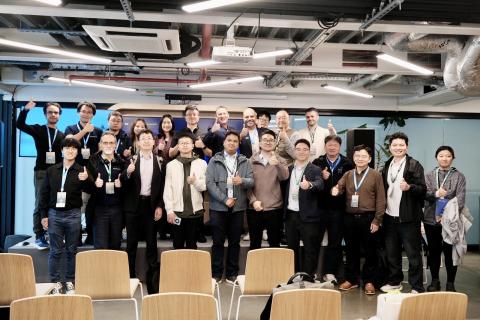
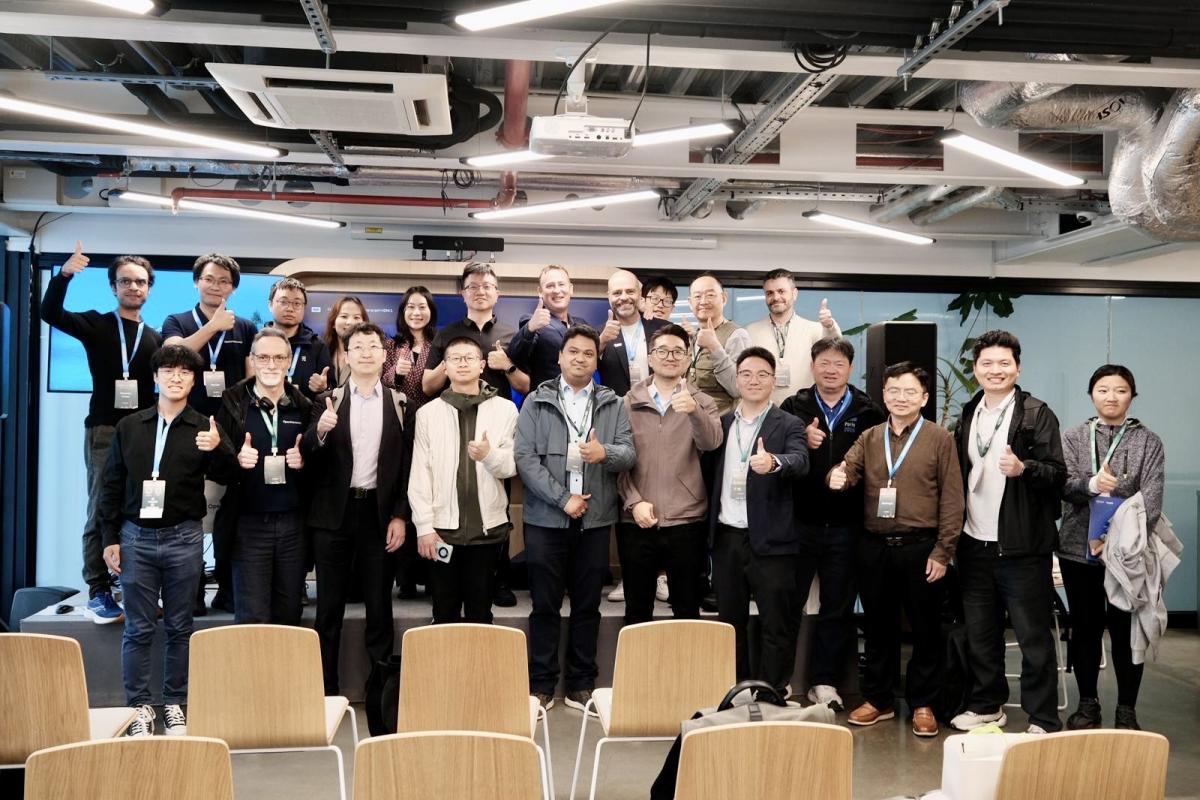
- GOSIM AI & OpenHarmony Tech Forum (Paris): On May 5-6, 2026, the team delivered three technical presentations focusing on distributed, AI-native operating system capabilities across GOSIM AI and its co-located OpenHarmony Tech Forum side event.
- Volla Community Days 2026 (Germany): On June 13-14, 2026, Francesco Pham presented Oniro’s native hardware execution at the Technologie Fabrik Remscheid, gathering direct technical feedback from early adopters.
Looking Forward to the Second Half of 2026
The Working Group is now organising its marketing and community resources for the OpenHarmony Technology Conference in Prague on October 3, 2026. This conference represents our flagship event of the year; it will feature a dedicated Oniro track and is co-located with the SOSP operating systems conference to engage senior industrial leaders and academic experts. The team is also considering its presence at SFSCON 2026 (Bolzano, November 13-14) to highlight digital sovereignty, alongside evaluating participation in major European student hackathons during Q4.
Finally, work on the official website refresh is moving forward. The Eclipse Foundation Marketing team is finalising the new site structure and copy-focused content, with visual design concepts rolling out in early Q3. Working Group members will collaborate closely during the next phase to ensure the final implementation aligns properly with our approved Program Plan.